
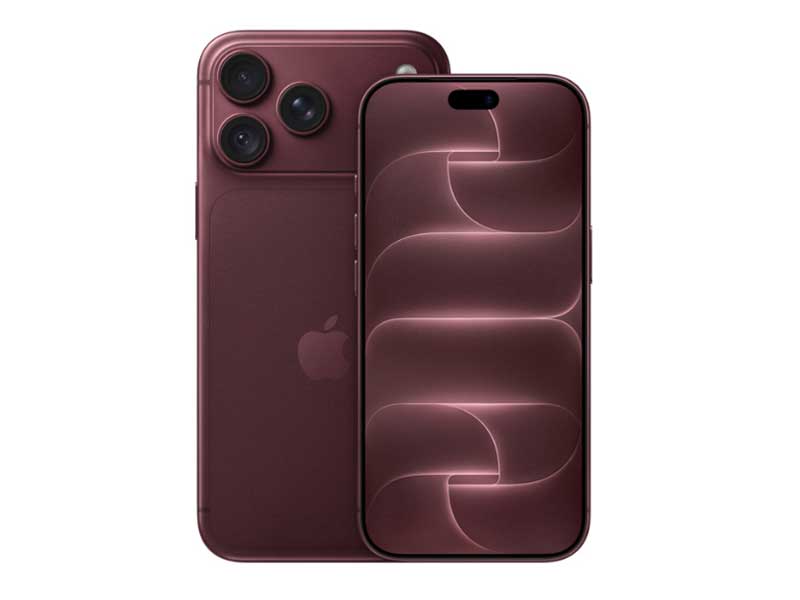
15 of the Best iPhone 18 Pro Features the $1,999 iPhone Duo Doesn’t Have
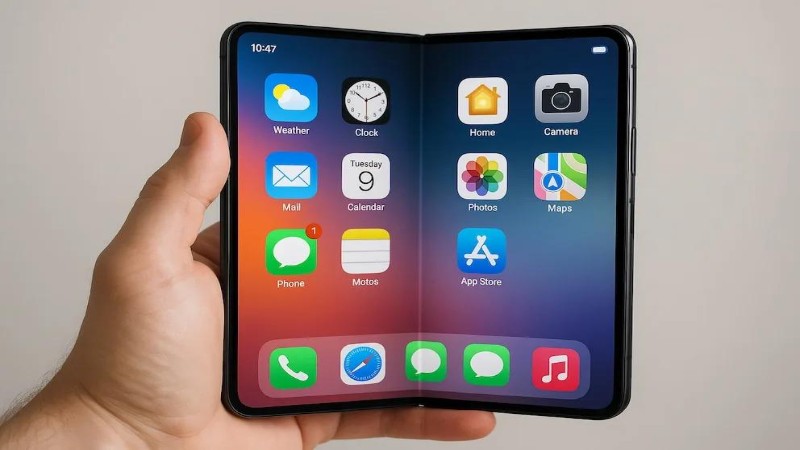
Apple’s first foldable iPhone is finally here, and the iPhone Duo is easily the most unusual device in the company’s current lineup.
Open it up, and there’s a 7.6-inch display. Close it, and it becomes a much smaller 5.4-inch phone. Apple has also redesigned iOS around the two-screen experience, added a new hinge system, and brought Touch ID back to the iPhone. At $1,999 in the US, it is also considerably more expensive than the iPhone 18 Pro.
But there’s an interesting catch.
Paying more for the iPhone Duo doesn’t mean getting every feature found on the iPhone 18 Pro.
In fact, Apple’s conventional Pro model has several capabilities that its much more expensive foldable doesn’t offer. Most of them are related to photography and video, although there are a few hardware differences that could affect everyday use.
If you’re deciding between the two, these are 15 iPhone 18 Pro features worth knowing about before spending your money.
1. A real telephoto camera
The biggest difference is sitting on the back of the phone.
The iPhone 18 Pro has a dedicated 48MP Fusion Telephoto camera with a 100mm equivalent focal length. The iPhone Duo doesn’t have a telephoto lens at all. Its two rear cameras are a 48MP main camera and a 48MP ultra-wide camera.
The Duo can still get closer to a subject using the main camera’s 2x optical-quality option, but that’s not the same thing as having a dedicated long-range camera.
For people who regularly photograph concerts, sports, pets, children or distant subjects, this could be one of the most noticeable differences between the two phones.
2. Up to 8x optical-quality telephoto
The Pro’s telephoto camera isn’t just there for decoration.
Apple gives the iPhone 18 Pro an 8x optical-quality telephoto option, equivalent to a 200mm focal length. Its overall optical-quality zoom range stretches from 2x to 8x.
The Duo, by comparison, stops at 2x optical-quality zoom through its main camera.
That means the Pro is much better equipped when your subject is genuinely far away. You can get tighter framing without relying as heavily on digital zoom.
For everyday photos, the difference may not matter. For travel, wildlife and live events, it can.
3. A variable-aperture main camera
This is one of the more interesting upgrades Apple has reserved for the Pro.
The 48MP Fusion Main camera on the iPhone 18 Pro uses a variable aperture that can move through several settings, including ƒ/1.48, ƒ/1.8, ƒ/2.8 and ƒ/4.0.
The Duo’s main camera has a fixed aperture.
Why should anyone care?
Changing the aperture gives the Pro more control over how much light reaches the sensor and how much of a scene remains in focus. It can be useful when shooting portraits, bright scenes or situations where you want more deliberate control over the image.
It’s not a feature most casual users will adjust manually, but it is a clear example of Apple giving the traditional Pro model more camera hardware than the foldable.
4. ProRAW photography
If you like editing your photos after taking them, the Pro has another advantage.
The iPhone 18 Pro supports Apple ProRAW, which gives photographers considerably more information to work with during editing. Apple’s specifications list ProRAW among the Pro’s supported image formats.
The Duo doesn’t offer the same ProRAW capture option.
That won’t matter if your normal workflow is taking a photo, applying a filter and posting it to Instagram. But anyone who spends time adjusting exposure, highlights, shadows, colour or white balance will probably appreciate having the extra flexibility.
5. Professional camera controls
The 18 Pro also gives users more control inside Apple’s Camera app.
You can manually adjust settings such as aperture, shutter speed and white balance, while also viewing a histogram.
The Duo’s camera experience is more straightforward.
That’s perfectly reasonable for a foldable designed to appeal to a broad audience, especially when its cameras also have their own foldable-specific features. But it means the Pro remains the better choice for someone who wants their iPhone camera to behave more like a dedicated camera.
6. ProRes recording
The differences become even more important once you start shooting video.
The iPhone 18 Pro supports ProRes recording, including 4K recording at high frame rates with external recording.
This is a format designed for workflows where footage will later be edited rather than simply uploaded straight from the phone.
The Duo can record impressive video, including 4K Dolby Vision at up to 120fps, but Apple’s specifications don’t give it the same ProRes feature set.
So despite being Apple’s futuristic foldable, the Duo isn’t necessarily the better phone for someone building a professional video workflow.
7. ProRes RAW
For even more serious video work, the 18 Pro goes further with ProRes RAW.
This is aimed at creators who want significantly more flexibility when processing and grading footage after recording. Apple lists ProRes RAW among the supported video formats on the 18 Pro.
It is very much a specialist feature, and most buyers will never use it.
But that’s actually part of what makes the Pro interesting: Apple has packed the conventional model with professional tools that aren’t available on its $1,999 foldable.
8. Apple Log 2
The Pro also supports Apple Log 2.
Log recording is designed to preserve greater flexibility for colour grading, making it particularly useful when footage is going into a more serious editing workflow.
Apple lists Apple Log 2 among the 18 Pro’s professional video features.
The Duo’s official feature set doesn’t include it.
For TikTok and Instagram clips, this probably won’t change anything. For filmmakers, however, it’s another reason to look at the Pro rather than assuming the more expensive Duo is automatically Apple’s most capable camera phone.
9. Genlock support
Here’s a feature most people probably won’t know they need until they actually work with multiple cameras.
The iPhone 18 Pro supports Genlock, which allows cameras and other equipment to synchronize their timing. That’s useful in advanced multi-camera production environments.
The Duo doesn’t offer Genlock.
This is definitely a niche feature, but its presence tells you something important about Apple’s priorities: the 18 Pro has been built with professional production in mind, not simply as the company’s premium everyday phone.
10. Academy Color Encoding System support
The Pro’s professional video ambitions continue with support for the Academy Color Encoding System, or ACES.
ACES is used in professional film and television production to help manage colour across cameras, editing systems and different stages of production. Apple includes ACES support in the iPhone 18 Pro’s video specifications.
It’s certainly not a reason for the average buyer to choose the Pro.
But if you’re a professional creator, it is another capability that separates Apple’s conventional Pro phone from the foldable Duo.
11. Spatial photos and videos
The 18 Pro also has an advantage if you’re interested in Apple’s spatial-media ecosystem.
Apple lists spatial photo capture and spatial video recording among the Pro’s camera capabilities.
The Duo’s camera system doesn’t offer the same spatial capture feature.
This is particularly interesting because the Duo’s enormous internal display might initially seem like the more natural device for immersive content. Yet Apple has kept this particular camera capability with the Pro.
12. An 18MP Center Stage front camera
The front camera is another area where the conventional Pro pulls ahead on paper.
The iPhone 18 Pro has an 18MP Center Stage camera, while the Duo’s outer front camera is 12MP.
The Duo does have something the Pro doesn’t: an additional under-display camera for the large inner screen. That’s useful for video calls when the phone is unfolded.
Still, when it comes to the primary front-facing camera, the Pro has the higher-resolution sensor.
That could be useful for selfies, video calls and shots where you want to crop into the frame later.
13. Face ID
Apple has made an interesting trade-off with the Duo.
Instead of Face ID, the foldable uses Touch ID built into the side button. The iPhone 18 Pro continues to use Face ID.
There isn’t necessarily a winner here.
Some people still prefer fingerprint authentication, while others have become accustomed to simply looking at their iPhone to unlock it or authenticate a payment.
But if you’ve used Face ID for years, the change will be immediately noticeable when moving to the Duo.
14. The Action button
The iPhone 18 Pro also has Apple’s configurable Action button.
It can be assigned to different functions and provides a physical shortcut without requiring you to open an app or dig through Settings. Apple continues to include it on the Pro, while the Duo leaves it out.
Interestingly, the Duo does still have Camera Control, so this isn’t a case of Apple stripping away every physical shortcut from the foldable.
It’s specifically the Action button that’s missing.
For anyone who has already built a habit around that button, it could be a surprisingly noticeable omission.
15. Physical SIM support
Finally, there’s a difference that has nothing to do with cameras.
The iPhone 18 Pro supports a nano-SIM alongside eSIM, as well as dual eSIM. The Duo is designed as an eSIM-only phone.
For users who already rely entirely on eSIM, this won’t matter.
But travellers and people who regularly swap physical SIM cards may find the Pro considerably more convenient.
It’s not an exciting headline feature, but it is a genuine capability that the less expensive phone retains.
The iPhone Duo is more expensive. The Pro is still more “Pro”
The iPhone Duo is undoubtedly the more ambitious product.
Apple has created a completely new form factor, given it a 7.6-inch internal screen, redesigned iOS around the folding experience, and added features that simply aren’t possible on a conventional iPhone.
But the iPhone 18 Pro tells a different story.
Its advantage isn’t about having a larger screen or a more unusual design. Instead, Apple has concentrated on making the Pro a more capable photography and video tool.
The dedicated telephoto camera, variable aperture, ProRAW, ProRes RAW, Apple Log 2, Genlock, ACES, and LiDAR are all examples of that approach.
And that’s what makes the comparison so interesting.
The iPhone Duo may be Apple’s most futuristic iPhone, but the iPhone 18 Pro is still the one that feels more purpose-built for people who want maximum camera and professional features.
So before spending nearly $2,000 on the foldable, it’s worth asking a simple question: do you want the iPhone that does something completely new, or the iPhone that does more of the things Apple’s Pro users already value?